 EN
EN  PT
PT ES
ES FR
FR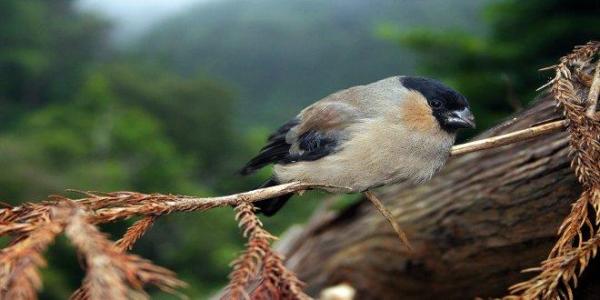
Observação de Aves
The Azores are known internationally as a destination for the observation of certain groups of bird species. Due to its central position in the Atlantic Ocean, it is possible to observe several migratory species that occasionally occur in the Azores due to migratory diversions caused mainly by bad weather. It is also possible to observe sea birds that nest in the Azores and endemic species and subspecies
.
Ilha de São Miguel
Description
In addition to the Priolo (Pyrrhula murina), one of the rarest birds in Europe and endemic to a small area of the Island of São Miguel, and the Monkfish (Oceanodroma monteiroi), one of the rarest sea birds in Europe and endemic of the islets of the island Graciosa, the Canary-of-land (Serinus canaria), an exclusive species of Macaronesia, and several endemic subspecies such as the Chaffinch (Fringilla coelebs moreletti), the Estrelinha (Regulus regulus azoricus, R. r. sanctaemariae , R. r. Inermis), the Wood Pigeon (Columba palumbus azorica), and the Milhafre (Buteo buteo rothschildi).
The Azores also have the most important nesting populations in the world at the level of shearwaters (Calonectris diomedia borealis), and Garajau-rosado (Sterna dougallii).
In total, the archipelago has approximately thirty breeding species. The number of occasional species already observed and recorded in the Archipelago is close to 400, among them some extremely rare and debutantes for the Western Paleárctico.
Bird watching can be practiced on all the islands, with the island of São Miguel and Graciosa being particularly important for the observation of endemic species, the island of Terceira for the observation of seagulls and waders of Neártica and Paleártica origin, and the islands of Flores and Corvo, for the observation of American passerines, in addition to the other species already mentioned.
Source: https://www.visitazores.com/