EN
EN  PT
PT ES
ES FR
FR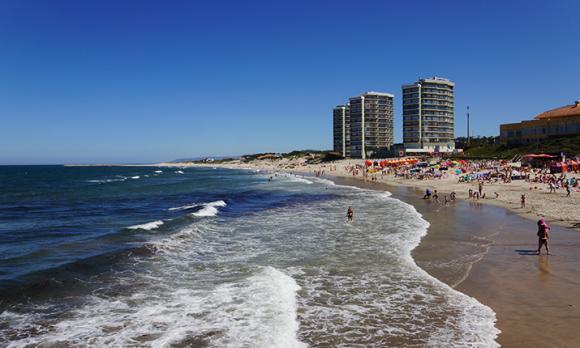
Roteiro das Freguesias - Fão
In order to get to know all the history, Heritage and Nature of Esposende, the Municipality has created several Itineraries that pass through its Parishes, which you must visit ...
Fão
Esposende
Description
In Vila de Fão, an old saline center from the Middle Ages, its historic nucleus stands out.
In the old urban structure of the village, on the left bank of Cávado, when we walk its streets it is easy to see the great influence that Brazilian culture had at the beginning of the century. XX, through the Brazilian taste of the rich “make-trip” that had notable residences erected. These brands are very evident, for example, in the current Largo do Cortinhal, in the imposing residence of Pinto de Campos, commander of the Merchant Navy, as well as at the southern top of Alameda do Bom Jesus. It is in this space that Francisco de Campos Morais, founder of the Campos Morais & C.a house, in the city of Rio Grande do Sul, implanted his “mansion”, recreating a typical Brazilian environment.
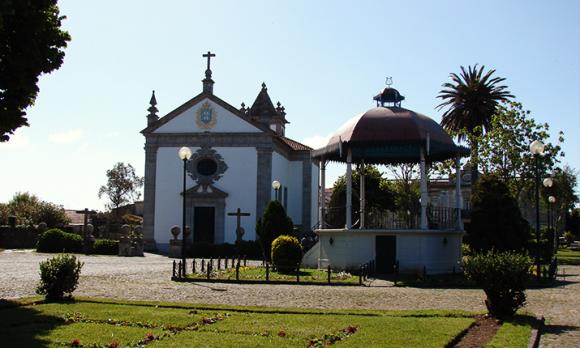
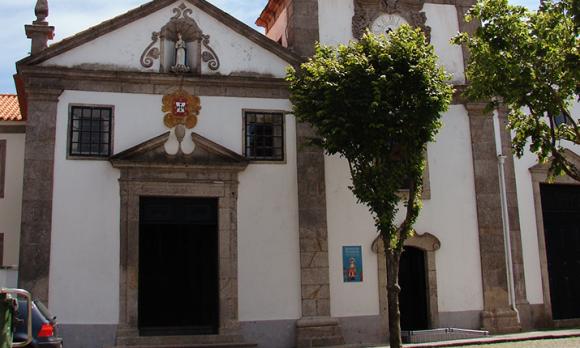
So let's start our journey through Alameda do Bom Jesus. At the southern top, it is worth looking for the Church of Bom Jesus de Fão, a building from the early 18th century, as its style, typical of pilgrimage sanctuaries, shows. Today, it invites for a pleasant stroll through the gardens. The main façade faces north, on the south side there is a tower with gargoyles and crowned with pinnacles. Above the main door, a broken pediment, topped by an ellipsoidal rosette. This temple was cherished and benefited by the Portuguese royal family, in the person of King D. Luís I. For that reason it displays the Portuguese royal weapons on the facade. The interior is shaped like a Latin cross with stone vaults and walls lined with tiles. On the main altar is the figure of Senhor dos Passos, locally referred to as “Senhor de Fão”. Every year, on the weekend immediately following Easter, the population of the parish of Fão takes care of promoting the secular and grand pilgrimage in honor of their patron. According to tradition, a woman will have found an image of the Lord Jesus Christ, buried in a quagmire, on the left bank of the Cávado River. This image would be the motto for the construction of the temple, existing today, and for the realization of this pilgrimage, which dates from the 19th century. XVI. Worthy of note and visit is the wonderful carpet made with flower petals that is truly "painted canvas", a symbol of greatness, donation and dedication by the fangueiros to the miraculous Bom Jesus, their Bom Jesus de Fão.
Not far from this Alameda, on the other side of the EN 13, next to the western end of the Parish Cemetery, is the Chapel of Santo António da Fonte, with a facade facing north and dating from the second half of the 17th century. In a niche you will find the image of Santo António, in painted stone, under a coat of arms. The front of the chapel ends with a triangular pediment, supporting a stone cross inside. Next to the west facade, look for a diving fountain; to access the fountain you will have to go down the seven steps that were installed there in 1850. The fountain is under an entire arch, on top of which you can still read an inscription that indicates a date: 1684, probably the date of construction the source.
It was a tradition that is being forgotten that lovers throw the pebble into the hole in the stone that serves as a frontispiece to the fountain. It is not a matter of providing a date at the source, under the protection of Santo António. The fountains provide water for the day-to-day and there were pairs. The stone-throwing ritual intends to know the term and success of the marriage.
Returning to Alameda do Bom Jesus and continuing north through Avenida Dr. Henrique Barros, we find the Chapel of Nossa Senhora de Fátima, close to Clube Fãozense. It is a small temple from the middle of the 18th century, formerly invoked by Nossa Senhora da Lapa, of baroque inspiration that belonged to Casa dos Carneiros. The Baroque motifs are very evident in the frames that decorate the entrance door and the rose window that illuminates the interior. It culminates in a curved pediment with two lateral pinnacles flanking a trilobed cross in stone. At present, the exterior wall is covered with blue-and-white ceramic tiles. Inside, there is a golden carved altar using Baroque technique. On the floor there is the grave of the owner of the neighboring emblazoned house, which has, in addition to the shield, the following legend: S. DE BONIFACIA SOVSA PP.ra DE MOURA CARNEIRO AND SEVS HERDEIROS IN PERPETVM 1759.
In Vila de Fão, an old saline center of the Middle Ages, the highlight of Na Av. Dr. Manoel Paes is the Igreja da Misericórdia. It is a Renaissance-style temple and dates from the late 16th century. From the outside, it is possible to guess its structure: a single nave, with a bell tower attached to the west facade. On the door and on the main façade, the pediments mark the rhythm and ornamentation of this temple, in which the white of the walls contrasts with the granites of the angles and the frames of doors and windows. But let's go inside ... the church's only nave leads the visitor's gaze to the main altar, on a rectangular headboard and wooden vaulted roof. The golden carving punctuates in the usual places ... note the decoration of the triumphant arch and the small niches that flank it. Enjoy the moment and visit the Museu de Arte Sacra da Igreja da Misericórdia, right next door.
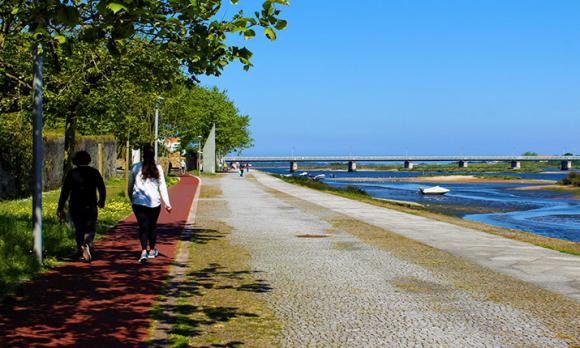
Nearby, Largo do Cortinhal, half walls with the Cávado River, is very popular with residents and visitors to talk and simply enjoy the beauty of the place.
The Parish Church of Fão, at Rua Prior Gonçalo Viana, under the invocation of S. Paio, is a building temple between the 17th and 19th centuries, which suffered some damage due to bad weather. In 1838 the invasion of the sands forced the roof to be fixed. If you look inside, in the chancel, you will find the oldest vestiges of this building: two doors, one of them bearing the date of 1673. The rest of the building is much later, with successive renovations throughout the 19th century. Near the end of the century, in 1893, the tower was erected. The facade shows a typical 19th century taste, with its sober air and simple but elegant pediment. The pinnacles that adorn this facade are also clearly from the eight hundred.
The Alminhas do Cais, in the continuation of Rua Azevedo Coutinho, next to the firefighters, were erected as a way to perpetuate the memory of the victims of the tragedy that occurred in an episode of shipwreck of the passing ferry (17th and 18th centuries) that would exist near that place in the river Dug.
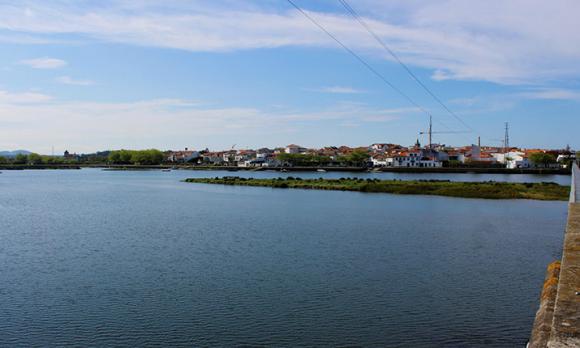
You will now be able to see the bridge of Fão, of its official name Ponte D. Luís Filipe, which connects the two banks of the river and which was, for more than a century, the main crossing of the Cávado on the coast. The connection between Porto and the upper Atlantic Minho, and Galicia, was necessarily made here. The bridge dates from the end of the 19th century, more precisely from 1892. It is a typical bridge of this time, with a metal structure deck based on granite supports, rhythmic throughout the course. The design of this elegant example of iron architecture was due to Abel Maria Mota. At the time of its construction, the engineer Eiffel lived in Barcelos and, therefore, it is usual to be attributed some inspiration in the design of this bridge. This example of the heritage of Industrial Architecture has been classified as a Property of Public Interest, since January 1986, by Government decree no. 1 of 3 January.
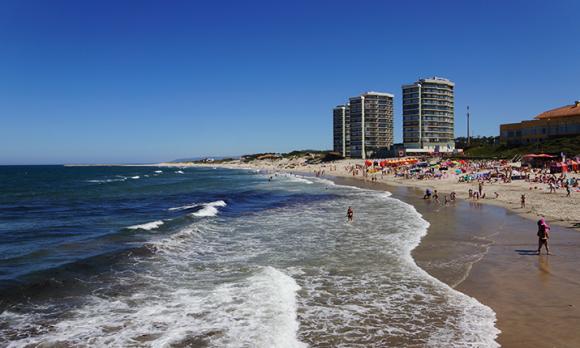
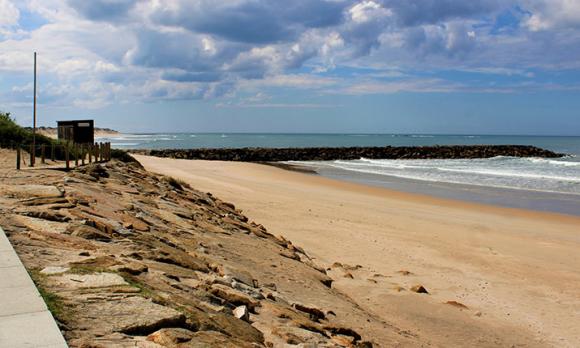
Take the road, through Av. Raul de Sousa Martins, to Ofir, a world-famous tourist resort with a long beach of fine sand surrounded by dunes with low vegetation. Ofir beach is a beauty! And Ofir's pine forest doesn't disappoint either! The large tame pines provide a welcome shade during the hottest hours, and the gentle undulation of the dunes builds a pine forest that, without being monotonous, invites you to tranquility. But Ofir is also lively: bars, hotels, clubs, the hustle and bustle of busy summer days and nights make this one of the most sought after areas in the region. In winter, the quiet settles in, but on sunny and cold days, when the Atlantic does not launch furiously against the dunes, a long walk on the beach can be a wonder too.
In the distance, at sea, the legendary Cavalos de Fão (rocks). Legend has it that, off the coast of Ophir, ships of the great King Solomon, which came in search of gold, moored in remote times. And a lot of gold carried the servants of that King in these places. One day, Solomon, who wanted to thank the inhabitants of these lands for the amount he received from them, ordered them to load wonderful horses on their ships, which he would send as an offering to Ofir. Already close to the coast, a sudden return of time, with great waves and wind roars as only the Atlantic is capable of producing, made the ships sink and with them the horses. But the elves, who prowled the beach, petrified the horses, transforming them into the rocks that, on calm days, we see above the water and, on stormy days, turn into white foam fans, day and night , lashed by the waters of the Ocean. And, due to the work of such elves, the horses were there forever, semi submerged, peeking at some ship that by careless pilot or inexperienced sailor gets too close to these coasts ... .
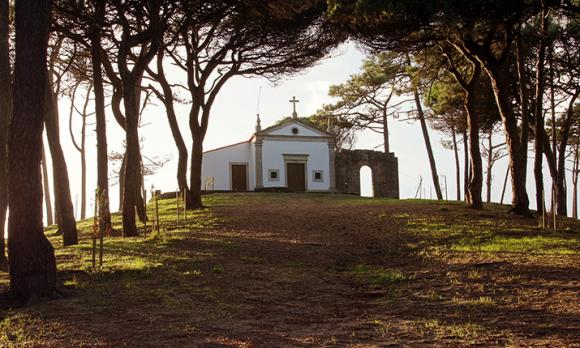
Proceeding a little south, through the road that leads to Apúlia (EM 501), take the direction of Lugar da Bonança to visit the Facho and Chapel of Senhora da Bonança. Facho functioned as a beacon for sailors until new dunes formed between its location and the coast, rendering it useless. But while it worked, it helped many sailors to escape from the dangerous “Cavalos de Fão” that stalked any inattentive boat or an inexperienced pilot in these waters. It is a 16th century building, built in stonework. At its top, a cauldron with burning flammable material caused a light that functioned as a beacon and helped sailors to avoid the dangers, also marking a point of reference for the entrance to the port. It was abandoned in 1834 and later served as a prison. Very close we find the Chapel of Senhora da Bonança, where seafarers come to ask for protection for fishing activity and sea trips. These prayers generally take the form of acronyms, which are testimonies of popular heraldry, or Ex-Votes, works of art of a naivety touching by the beauty and emotions that allow us to guess.
At Lugar dos Lírios, a little south of Bonança, the Medieval Cemetery of Barreiras is one of the most significant monuments of this type in the entire Iberian Peninsula. The number of graves that could be identified amounts to around two hundred and the dates vary between the 11th and 14th centuries. This fact was due to the advance of the sands, verified from the century. XV, which completely sealed this site, keeping it preserved and intact until the moment when the first archaeological interventions were recorded, at the end of the 1980s. XX. The last burials carried out in this cemetery are said to have been contemporaries of the Black Death that devastated European populations. Mortality levels across Europe are estimated to have reached half or even two thirds of the population, leaving places, towns and cities almost uninhabited. Entering this cemetery does not fail to evoke that period, in which the fear of death due to hunger or war, which scared medieval man in a way that we can hardly imagine, was joined by the fear of the plague, in the completion of the terrible late trilogy -medieval of "famine-pest-and-war".
Source: https://www.visitesposende.com/
Através deste Roteiro, do Concelho de Esposende, vai conhecer valores históricos, naturais e Patrimoniais desta localidade que não pode deixar de visitar...
Comments
There are no comments!
Partners same locality